This blog will be considered Part 2 of a 4-Part series pertaining to Portfolio Implementation. Please view the Part 1 blog
Client onboarding sounds as simple as opening some accounts and processing a few transfer forms, right? Well in fact there is a lot more that goes into this very critical stage than just that, and for very good reason.
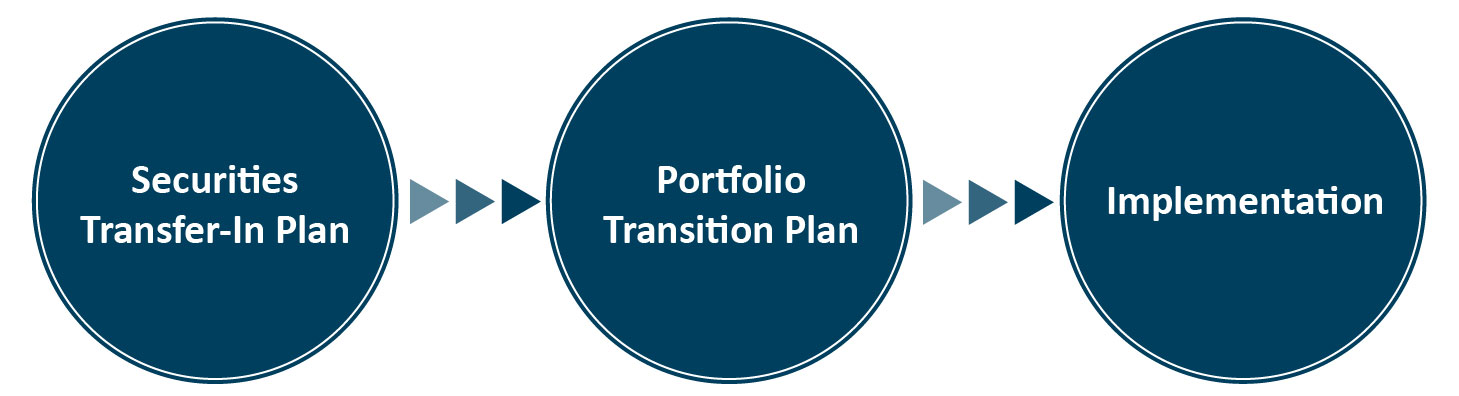
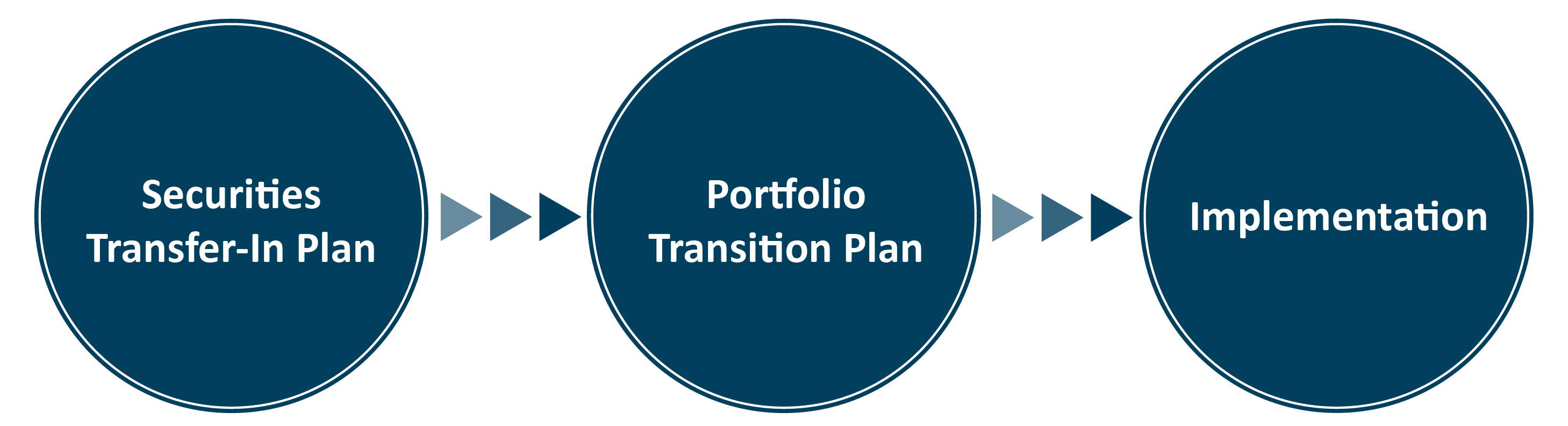
As a reminder, HighView’s Portfolio Implementation Approach is as follows:
Part 1 of this series addressed the 3 key steps that should be taken to properly implement a portfolio. Part 2 of this series addresses the first phase of the client onboarding process Securities Transfer-In Plans.
Not everyone comes to HighView with cash on hand and sometimes it is not in the client’s best interest to sell securities prior to transferring cash proceeds. Sometimes it makes better sense to transfer these securities as-is (ie. in-kind) and incorporate them into their new HighView portfolio where it makes investment sense. We do not blindly sell out of a client’s existing holdings before doing a proper analysis on them.
Depending on where the client’s current portfolio is held or who currently manages it they could be faced with some key decisions that they have probably never considered before (or needed to consider) regarding HOW they are going to transfer their portfolio assets from their current advisor to their new one. These decisions are important because they could have some serious financial implications including tax consequences, redemption penalties, opportunity costs, etc.
This is why we feel it is important to have this stage as a prerequisite step to establishing a portfolio with HighView and processing transfers. The point of analyzing a client’s existing account statements from their current advisor is to ultimately avoid any needless/unnecessary costs to the client as they are transferring out from their current advisor.
HighView’s role (and legal obligation) as a fiduciary is to ensure the client’s best interest is put first and we take great care considering a number of different variables when we begin a new client relationship. In fact, this Securities Transfer-In Plan stage includes the consideration of the following 10 variables that can be grouped into 3 broader buckets:
1) Consequences of Exiting
2) Consequences of Transferring In-Cash vs. In-Kind
3) Company Insiders and Special Requests
2. Special Requests by the Client
After we have reviewed a client’s existing account statements we mark each security according to what we determine to be in the client’s best interest, considering the above variables. This is then packaged up in a document for the client’s final review before we begin processing transfers.
We at HighView strive to be a thoughtful, caring portfolio management firm and we feel that this critically important part of the client onboarding process not only reinforces that sentiment, but also enhances the client onboarding experience.
If our approach is something that you feel would be a good fit we welcome the opportunity to have a conversation with you.
Be sure to bookmark HighView’s blog “The Wealth Steward” to keep up to date with interesting and relevant industry topics: https://www.highviewfin.com/blog/
Stay tuned for the Part 3 blog pertaining to Securities Transfer-In Plans. Please view the Part 1 blog.
Regardless of how you acquired your wealth, there’s one thing all investors have in common—a…
An architect wouldn’t design a custom home for a family without first asking many questions…
Financial planning is the first step in a comprehensive discovery phase at HighView Financial Group.…
A “fixed asset” is a long-term tangible asset that is not expected to be consumed…
One of the core principles at HighView is to understand the purpose of the portfolio.…